Claim: Mulholland’s on-air presentation and statements about being both “reporter” and “protester” at a politically volatile event undermine the independence expected of journalism and should be evaluated as a conflict-of-role under standard ethics frameworks.[1] [2]
Key point: This post is not about criminality or guilt-by-association. It is about role separation: when a person claims “press” authority while also participating, credibility and independence become the central issue.[2]
At a violent or high-risk political event, “press” is a role with duties. Participation collapses the role into advocacy.
In this article
- Prologue: what the branding signals (record)
- Part I: the standard (what journalism requires at a violent event)
- Part II: the record (what Mulholland says/does on tape)
- Part III: the holding (why this fails the journalism test)
- Primary Source Excerpt (Video)
- Sources
Prologue: what the branding signals (record)
Observed presentation: The livestream/channel presentation opens with recurring ideological iconography (e.g., a hammer-and-sickle logo used as an identity marker). This is a public-facing disclosure of alignment, not a hidden inference.[1]
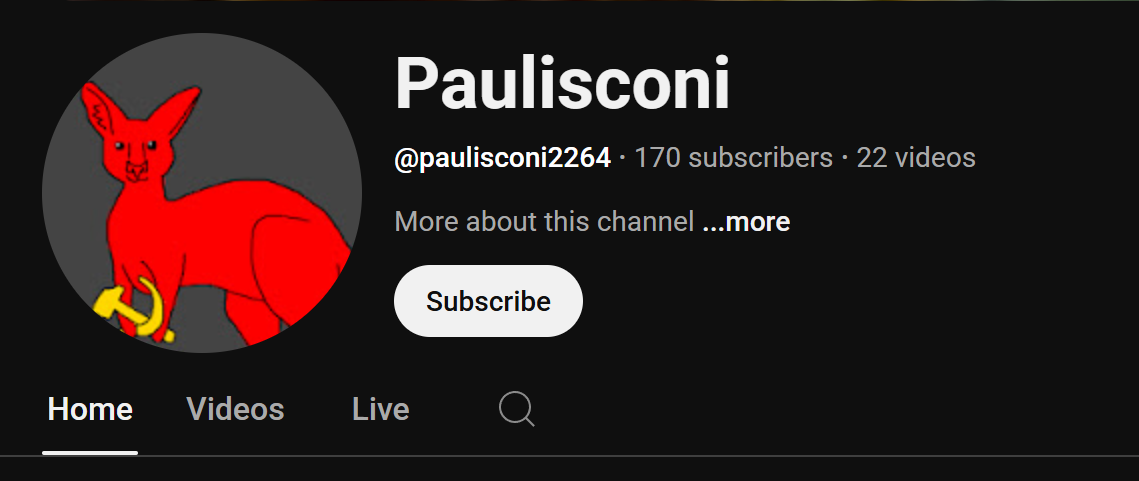
Why it matters: Branding alone does not prove factual claims are false. But it does affect how a reasonable reader weighs independence and neutrality claims—especially when the content itself concerns politically charged subjects.[2]
Part I: the standard (what journalism requires at a violent event)
Journalism ethics frameworks typically require minimizing harm, acting independently, and being accountable and transparent. At a violent or high-risk political event, independence and non-participation are credibility-critical: a journalist can document, but should not materially participate in the action being documented without fully disclosing the role conflict and accepting the credibility consequences.[2]
- Role separation: “Observer/reporting” and “participant/advocate” are not the same role.
- Transparency: if there is participation, disclose it clearly and early, including what was done and why.
- Verification discipline: political events generate misinformation; claims need primary sources, timestamps, and corrections.
“Press” credibility is earned by method: independence, verification, and restraint—especially where violence and propaganda are in play.
Part II: the record (what Mulholland says/does on tape)
This section documents Mulholland’s own descriptions of his conduct on January 6th, taken directly from recorded video. The purpose here is not speculation or motive attribution, but to establish a factual record of what he says he did, how he describes his role, and how those descriptions align—or fail to align—with basic journalistic standards for covering violent or volatile events.
Quote #1 (self-description of role): Mulholland states that he attended the Capitol on January 6th “as a reporter, not as a protestor.”
Why this matters: Whether someone is acting “as a reporter” is not determined by self-labeling alone. It is assessed by conduct: preparation, method of information gathering, situational awareness, and maintenance of independence from crowd activity. This claim sets a standard that the subsequent footage and statements must meet.
Quote #2 (technical readiness): Mulholland states that his microphone was off “the whole time.”
Why this matters: At a high-risk, fast-moving event, basic journalistic practice includes equipment checks and redundancy. An inoperative microphone undermines the ability to capture primary-source audio, conduct contemporaneous reporting, or document unfolding events reliably. This is not a minor technical detail; it speaks directly to preparedness and professionalism.
Quote #3 (physical engagement with the crowd): Mulholland describes “pressing up, pushing in, trying to get past police,” and being unable to proceed because conditions were “too dense.”
Why this matters: Journalistic norms emphasize observation without participation, especially during volatile or violent events. Actively pressing into police lines and dense crowd activity risks becoming part of the event rather than an independent observer. When a reporter’s physical actions mirror those of the crowd they are covering, the boundary between reporting on the story and becoming part of it collapses.
Part III: the holding (why this fails the journalism test)
If the record supports that Mulholland both invokes journalistic status and participates as a protester (or materially assists one side), the independence test fails on its face. The critique is structural: participation collapses the observer role. The ethical remedy is not branding—it is disclosure, restraint, and a methods-forward approach (claim vs record, corrections, and right-of-reply where applicable).[2]
- Independence: compromised by declared participation.
- Transparency: any participation must be disclosed as a conflict-of-role.
- Reliability: claims should be supported by primary evidence and timestamps, not framing language.
Bottom line: If the record is “reporter + protester,” then this is advocacy content wearing a press label, and audiences should weigh it accordingly.[2]
Primary Source Excerpt (Video)
The following clip is included for primary-source verification. It is provided so readers can evaluate the on-air presentation, role signaling, and the relevant statements in the speaker’s own published material.
Primary-source excerpt. Included for documentation and analysis. No endorsement implied.
Sources
- Primary visual record (branding): [Insert exact URL(s) to the livestream/video/channel page showing the logo + date accessed + optional archive link.]
- Ethics framework: [SPJ Code of Ethics or equivalent authoritative standards link—focus on “act independently,” “be accountable and transparent,” “minimize harm.”]
- Exhibit C (clip source): [Insert exact video URL + timestamps for “reporter + protester” line(s). If self-hosted, include original upstream URL and how the clip was obtained.]