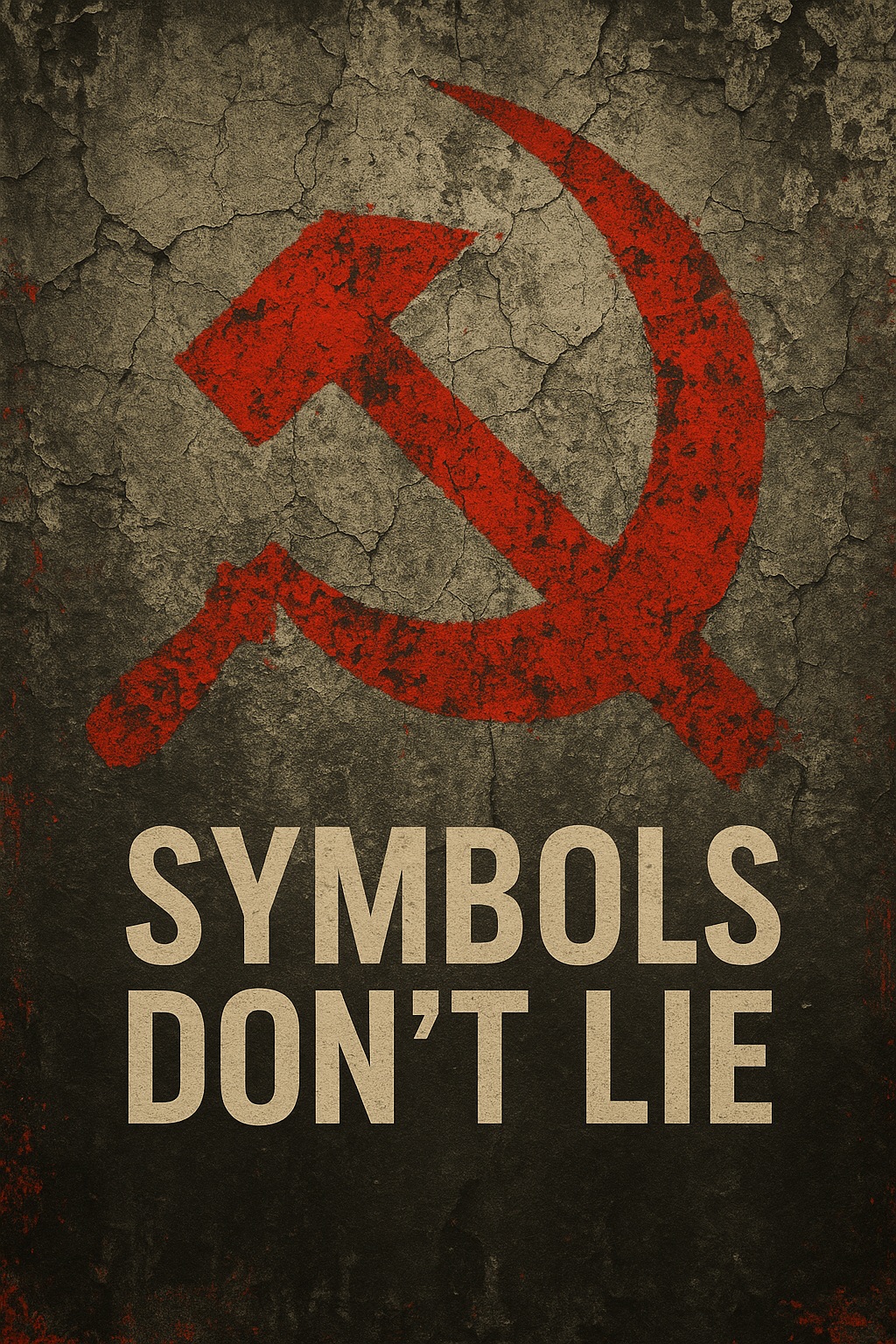
Claim: Mulholland’s on-brand use of the hammer-and-sickle iconography functions as an explicit ideological signal that undermines claims of neutral, independent journalism and should be treated as disclosed bias—not “just aesthetics.”[1]
Key point: Branding choices are not evidence of wrongdoing by themselves, but they are evidence of declared alignment. A standards-based critique should treat them as a credibility factor (independence / transparency), not as a moral panic.[2]
When you foreground ideology as brand, you don’t get to sell “neutral reporting” without explaining the conflict.
In this article
- What the branding is (record)
- Why it matters under journalism standards
- The “double standard” argument (and the clean way to make it)
- What this does not prove
- Conclusion
- Primary Source Excerpt (Video)
- Sources
What the branding is (record)
Observed branding element: The channel/project presentation prominently featured hammer-and-sickle iconography as part of the YouTube channel’s visual identity, including profile imagery and on-screen branding elements. This was presented publicly as part of the claimed “journalist” identity, not as background decoration or third-party content.[1]
Why this is relevant as “record”: Visual identity choices on a public channel are affirmative disclosures. They communicate alignment, tone, and worldview to the audience. This assessment is based on direct observation of published materials, not inference or speculation.[1]
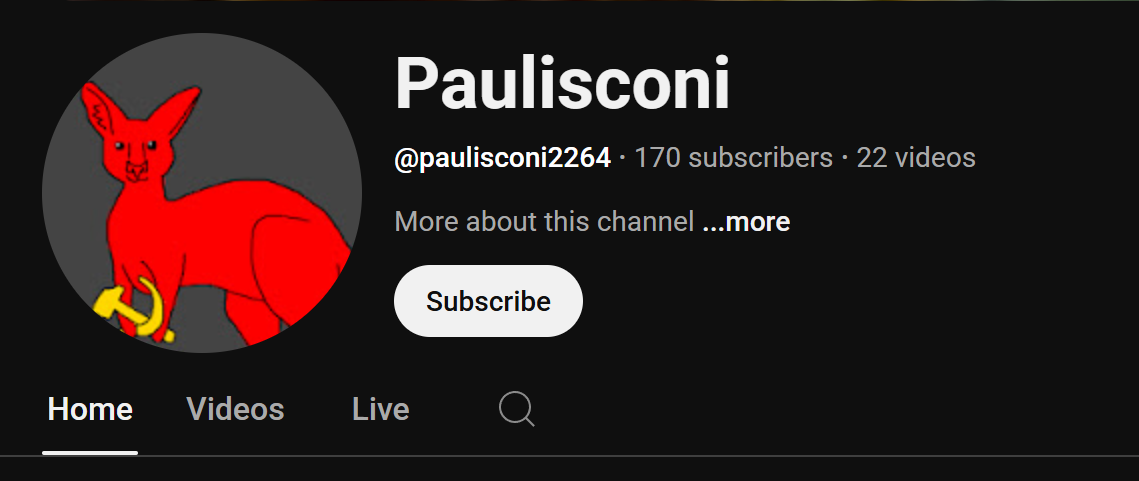
Subsequent modification: After public scrutiny, the hammer-and-sickle imagery was removed from the channel’s profile photo and updated branding visuals. A later profile image reflects this change, indicating an intentional revision rather than an error or accidental upload.[1]

Persistent appearance in published content: Despite the later removal from the profile image, hammer-and-sickle iconography remains visible at the beginning of the January 6 livestream, which is still publicly accessible. This confirms that the branding element was part of the channel’s presentation at the time of publication and not an isolated or transient artifact.
January 6 livestream (public record, linked for reference):
https://www.youtube.com/watch?v=C-rx4UzXz6w
Applicable journalism standards
Core principle: Journalism ethics standards emphasize independence, transparency, and avoidance of undisclosed advocacy. While journalists may hold personal beliefs, professional norms require that reporting not be presented in a way that signals ideological alignment as part of the reporting identity itself.
Visual neutrality and disclosure: Reputable journalism organizations consistently treat branding, presentation, and visual identity as part of the editorial product. When a reporter publicly incorporates ideological symbols into their professional branding, that choice functions as a disclosure of perspective and advocacy, not a neutral aesthetic decision.
Distinction between reporting and activism: Journalism standards draw a clear line between reporting facts and advancing a cause. Activism is not prohibited, but it must be clearly labeled as such. Presenting advocacy-driven content under the label of neutral journalism without disclosure undermines audience trust and violates basic transparency expectations.
Corrections versus rebranding: Ethical corrections address factual errors through acknowledgment and clarification. Quietly removing previously displayed ideological branding without explanation does not constitute a correction and does not erase the historical record of how content was originally presented.
Why this matters: Journalism credibility depends not only on what is reported, but how it is framed and presented. Visual identity choices are part of that framing. When ideological signals are embedded in a journalist’s public-facing branding, they become relevant context for evaluating claims of neutrality and independence.
Why it matters under journalism standards
Mainstream journalism ethics frameworks emphasize (1) independence, (2) minimizing harm, (3) transparency and accountability. Brand-forward ideology interacts most directly with independence and transparency: if a reporter publicly signals affiliation, audiences should treat neutrality claims as qualified and demand stronger verification and disclosure.[2]
- Independence: Prominent ideological signaling increases the appearance of pre-commitment to conclusions; that raises the bar for corroboration and right-of-reply.
- Transparency: If the brand signals ideology, the work should explicitly disclose the lens and methods (what is verified vs inferred, what is sourced vs asserted).
- Accountability: Claims should be framed as “claim vs record,” with links/timestamps and a corrections pathway.
This is a credibility issue, not a criminal allegation: ideological branding doesn’t prove facts, but it does change how a reasonable audience should weigh the work.
The “double standard” argument (and the clean way to make it)
The strongest version of the “double standard” argument is procedural, not incendiary: if audiences treat overt political iconography as disqualifying for perceived neutrality in one direction, consistency would require treating it as a disclosure of bias in the other direction as well. The point is about standards (independence and disclosure), not equating histories, body counts, or moral categories inside a blog post.[2]
What this does not prove
To keep this post defensible and “casefile clean,” draw a bright line between what is observed and what is inferred:
- Does not prove: criminal intent, wrongdoing, or membership in any organization.
- Does not prove: specific factual claims in any reporting are false.
- Does support: a reasonable inference of declared ideological positioning (because it’s presented publicly as brand identity).
- Does support: a standards-based demand for stronger disclosure and verification practices.
Conclusion
When a project presents ideology as a core visual identity while also claiming “journalist” authority, the correct response is not vibes—it’s standards: disclose the lens, separate claim from verified fact, provide primary-source links/timestamps, and invite correction. Absent those safeguards, the branding operates as a standing credibility discount: activist presentation, journalist label.[2]
Bottom line: ideology-forward branding isn’t proof of falsehood, but it is proof of declared alignment—and audiences should weigh the work accordingly.
Primary Source Excerpt (Video)
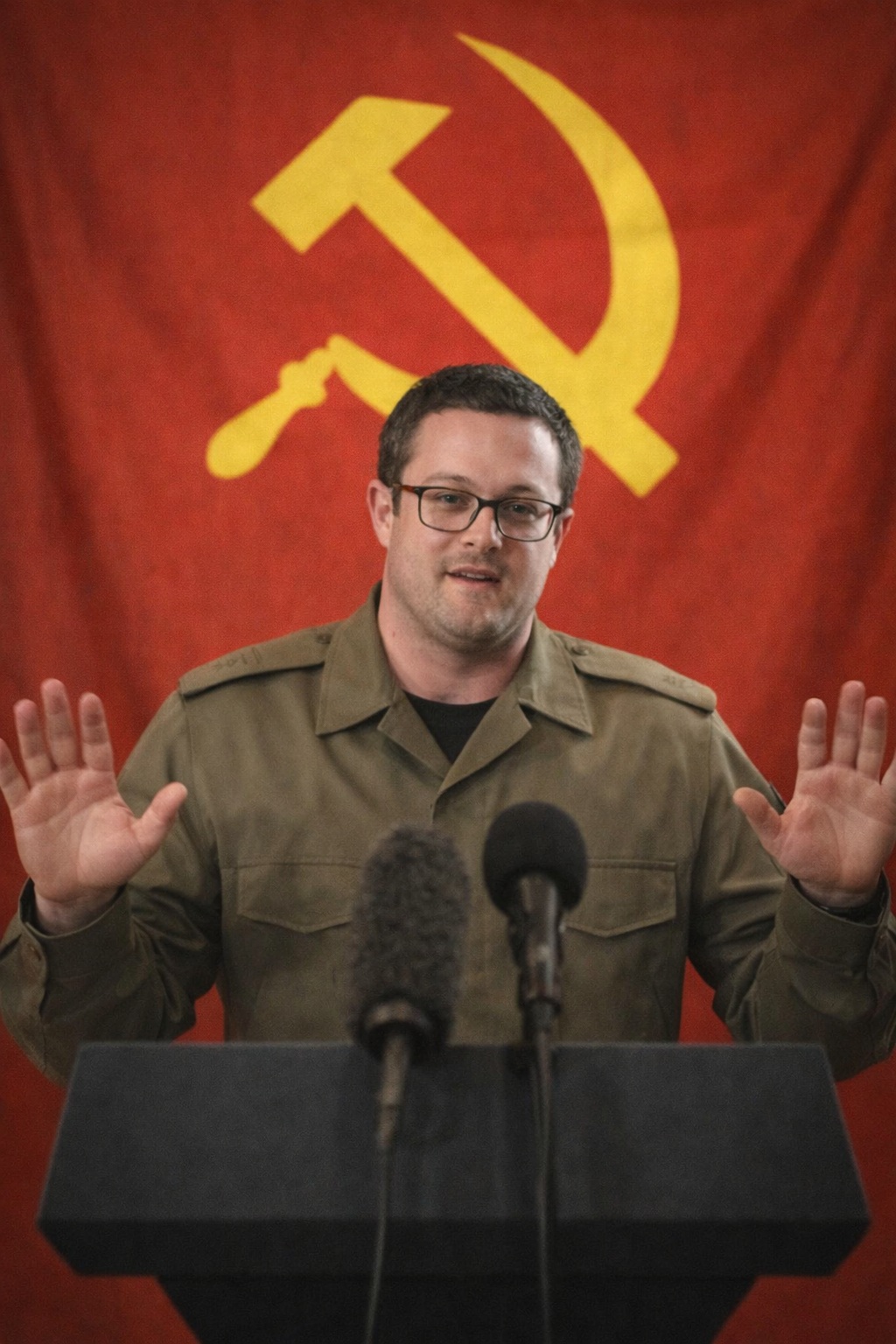
The following clip is included for primary-source verification. It is provided so readers can evaluate the presentation, framing, and branding elements in the speaker’s own published material.
Primary-source excerpt. Included for documentation and analysis. No endorsement implied.
Sources
- Primary visual record: [Insert exact URL(s) to the channel page, video, screenshot, or archived capture that shows the branding clearly + date accessed.]
- Ethics framework: [SPJ Code of Ethics (or other recognized journalism ethics framework) + any relevant “act independently / be accountable / transparent” sections.]